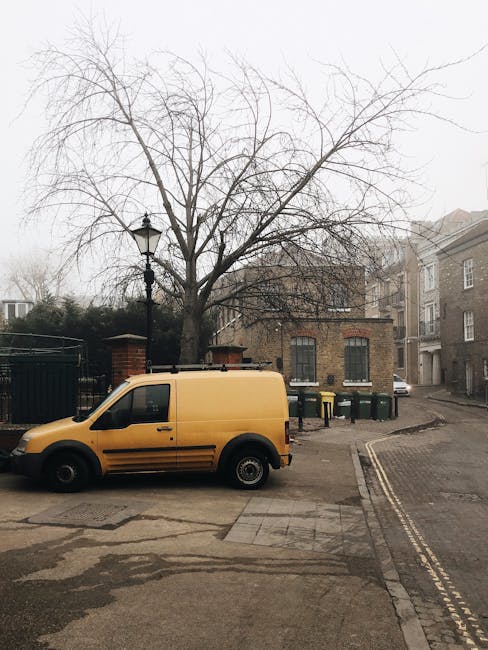
Difficult access moves in Kentish Town flats man and van solutions
Moving out of a Kentish Town flat is rarely as simple as carrying a few boxes downstairs and loading a van. More often, it means narrow stairwells, shared hallways, tight turns, heavy doors, awkward parking, and the kind of access issues that make even a small move feel strangely complicated. That is exactly where Difficult access moves in Kentish Town flats man and van solutions come into their own.
If you are trying to move from a top-floor flat, a building with no lift, or a place where the van cannot park close by, the whole job needs a different approach. The right plan saves time, reduces damage, and takes a lot of stress out of the day. In this guide, we will walk through how these moves work, what makes them tricky, who they suit, and the practical steps that make them smoother. A few small details up front can make a surprisingly big difference.
For people comparing move types, it can also help to look at broader services such as flat removals, man and van support, or even packing and boxes if the access situation means you need to be extra organised.
Table of Contents
- Why difficult access moves matter
- How the moving process works
- Key benefits and practical advantages
- Who this is for and when it makes sense
- Step-by-step guidance
- Expert tips for better results
- Common mistakes to avoid
- Tools, resources and recommendations
- Law, compliance, standards and best practice
- Options, methods and comparison table
- Case study or real-world example
- Practical checklist
- Conclusion
- Frequently asked questions
Why Difficult access moves in Kentish Town flats man and van solutions Matters
Kentish Town has a mix of period conversions, mansion blocks, newer developments, and compact flats above shops or along busy residential streets. That variety is part of the area's charm, but it also creates plenty of moving headaches. A standard vehicle-and-boxes approach is often not enough when access is restricted or the building layout is unforgiving.
Why does this matter so much? Because access problems do not just slow things down. They can cause damaged furniture, scratched walls, strained backs, missed parking windows, and delays that ripple through the rest of the day. In a flat move, one awkward landing or a long walk from the van can turn a two-hour job into a much longer one.
There is also the human side. Moving day already feels loaded. If you are watching a sofa get stuck on a staircase while the clock is ticking, the stress rises fast. A good man and van setup is built around this reality. It is not just transport; it is problem-solving.
Expert summary: the best difficult access move is rarely the fastest one on paper. It is the one that is planned around the building, the parking, the load order, and the items that are most likely to cause trouble.
If you want a broader service that is designed around flexible support rather than a rigid full-scale removal, many people start by comparing removal services and removal van options. For shorter, highly practical jobs, that can be the right fit.
How Difficult access moves in Kentish Town flats man and van solutions Works
In plain English, the process is about matching the right vehicle, the right number of movers, and the right loading method to the access conditions at both ends of the move. The job is usually simpler when you think of it as logistics, not just lifting.
1. Assess the access before moving day
Before anything is lifted, the mover should understand the building layout. That means asking about stairs, lift size, corridor width, floor level, door clearance, parking distance, and any shared entrances. A van parked outside the door is one thing. A van parked half a street away is another story entirely.
In practice, many access issues can be managed, but only if they are known early. A top-floor flat with no lift may need more time, more careful packing, and a different loading sequence. A basement flat may mean extra care on steps and lighting. These are the kinds of details that seem small until you are carrying a wardrobe through them.
2. Match the move to the load
Not every difficult access move needs a larger vehicle. Sometimes a man with van arrangement is the smartest choice because the vehicle can fit into tighter streets and the team can work in a more agile way. Other times, especially for bigger household moves or multiple large items, a moving truck or a more structured removals setup may be better.
The point is fit. A smaller, well-planned vehicle can sometimes beat a larger one that cannot park properly. That is one of those little truths of London moving that people only learn the hard way, usually while standing on the pavement with a mattress.
3. Break the work into sensible stages
For awkward access, the best movers think in stages: protect the property, create a safe path, move fragile or bulky items first if needed, and keep the load order efficient. If there is a long carry from the flat to the van, items may be grouped by weight and fragility so the route is used efficiently rather than repeatedly.
4. Use the right handling methods
Tools such as blankets, straps, trolleys, and protective wraps help reduce damage and make carrying easier. In a narrow stairwell, these are not luxuries. They are often the difference between a neat move and a scuffed wall. For items that need special care, it is worth considering furniture removals or, for cherished instruments, piano removals.
Some moves also benefit from extra preparation through packing and unpacking services, especially if access is tight and you want items ready to carry without last-minute reboxing.
Key Benefits and Practical Advantages
There are real advantages to using a man and van solution for difficult flat access in Kentish Town. The service is not only about price, although that can be a factor. It is mainly about flexibility, responsiveness, and keeping the move practical.
- Better access handling: smaller vehicles and more agile planning can suit narrow streets and awkward parking.
- Reduced handling stress: fewer unnecessary lifts and less back-and-forth when the plan is well organised.
- Faster problem solving: if something does not fit as expected, a practical mover can adjust on the spot.
- Lower damage risk: careful route planning and protective equipment help avoid knocks and scrapes.
- Scalable support: from a few items to a whole flat, the service can often be shaped to the job.
There is another benefit that is easy to overlook: peace of mind. Once you know the move has been designed around the access conditions, the day feels less like guesswork and more like a process. That matters a lot when you are juggling keys, boxes, and the general chaos of moving house.
People also often appreciate that these services can be paired with storage if the new flat is not quite ready, or same day removals if the timing is tight and there is no room for delay.
Who This Is For and When It Makes Sense
This kind of move makes sense for anyone dealing with access that is more difficult than average. That could be a first-floor flat with a narrow communal staircase, a top-floor apartment with no lift, or a converted building where the front door opens onto a tiny shared landing. It could also be a ground-floor flat where the parking is the real issue.
Typical examples include:
- Tenants moving out of older London flats with compact staircases
- Students relocating between shared flats and needing quick turnaround
- Couples moving light furniture from a small apartment
- People shifting a few large items rather than a full household load
- Families who need one careful trip rather than multiple van journeys
It can also be a good fit for people who are simply short on time. If you know access is awkward and you do not want the move to drag on, a focused service can be the calmer option. For some readers, student removals are especially relevant because student flats are often exactly the kind of place where the stairs are steep, the lift is tiny, and the parking situation is never quite helpful.
Business moves are not immune either. A small office in a converted Kentish Town building may need commercial moves or office removals with the same access planning mindset. Different setting, same basic headache.
Step-by-Step Guidance
If you are preparing a difficult access flat move, the best results come from a simple but disciplined process. Nothing flashy. Just proper preparation.
- Walk through the access route. Check the stairwell, front door width, hallway turns, lifts, and any awkward corners that could catch furniture.
- Measure the large items. Sofas, wardrobes, beds, mattresses, fridge-freezers, and tables are the usual troublemakers. Measure them before moving day.
- Confirm parking and stopping space. If the van cannot park close enough, build that extra distance into the time estimate.
- Sort and label the load. Keep essentials separate and label boxes clearly so you are not hunting for kettle leads at the last minute.
- Protect the property. Use floor covers, blankets, and careful lifting to avoid damaging walls or bannisters.
- Load in a practical order. Start with the items that are hardest to manoeuvre, then work through the more flexible boxes and bags.
- Leave a little time cushion. Access delays happen. A lift can be out of service, a neighbour may block the entrance, or someone may be using the only unloading space. Real life, basically.
That last point is more important than people think. A move planned with zero slack tends to feel fragile. Even fifteen extra minutes can make the day feel much less frantic.
If your move involves lots of items but limited access, you may want to compare house removals with home moves. The best choice depends on how much needs shifting and how difficult the building is to work in.
Expert Tips for Better Results
There are a few practical habits that make difficult access moves noticeably smoother. These are the things experienced movers tend to pay attention to without making a song and dance about it.
- Keep corridors clear: even a small pile of shoes or a bike in the hallway can slow everything down when you are carrying a bulky item.
- Disassemble what you can: bed frames, table legs, and some wardrobes are easier to handle in parts. Obvious, perhaps, but often ignored.
- Use consistent box sizes: this makes stacking and carrying easier, especially on stairs.
- Protect corners and railings: a blanket in the right place can prevent a lot of irritation later.
- Pre-book lift times if possible: shared buildings can be surprisingly busy on moving day.
- Tell your mover the awkward bits first: the narrow door, the low ceiling, the parking restriction. Do not leave the hard part until the end of the call.
One practical trick that helps in real life: keep a "first out, last in" box with keys, chargers, tea, toilet paper, and basic cleaning stuff. It sounds small, but after a staircase-heavy move, finding a mug without rummaging through fifteen boxes is a nice little victory.
If you are moving heavier household items, a focused service such as furniture pick up or furniture removals can be a sensible add-on, especially when only certain pieces need specialist handling.
Common Mistakes to Avoid
Most access-related moving problems are preventable. The issue is that people often underestimate them until they are standing on the stairs, breathing a bit harder than expected. Here are the mistakes worth avoiding.
- Underestimating stair difficulty: a staircase that looks manageable from the bottom may feel very different with a wardrobe halfway up it.
- Ignoring parking restrictions: even a short walk from the van becomes a big deal when repeated several times.
- Packing boxes too heavily: a box that is technically liftable may still be awkward on narrow stairs.
- Forgetting fragile edges: mirrors, tabletops, and radiator covers need extra care in tight spaces.
- Assuming the lift will work: if a lift is part of the plan, have a fallback route in mind.
- Booking the wrong type of vehicle: too big can be a problem just as much as too small.
There is also the classic "it will probably be fine" approach. Sometimes it is fine. Often it is not. Access moves reward realism.
If you are comparing providers, it can help to look at the broader set of removal companies or a simpler man with van arrangement. The right choice depends on the access complexity, not just the size of the move.
Tools, Resources and Recommendations
You do not need a warehouse full of kit to manage a difficult flat move well, but a few tools make life much easier. In the right hands, the basics are enough.
| Tool or resource | Why it helps | Best used for |
|---|---|---|
| Furniture blankets | Protects corners, doors, and delicate finishes | Sofas, tables, wardrobes |
| Straps | Makes lifting and stabilising easier | Heavier boxes and appliances |
| Trolley or sack truck | Reduces repeated carrying over longer distances | Long walk from flat to van |
| Labelled boxes | Speeds sorting and unloading | Everyday household goods |
| Protective wrap | Keeps surfaces from scuffing | Mattresses, mirrors, furniture |
| Pre-move checklist | Stops small but important details being missed | Any move with access constraints |
When choosing support, it is also worth checking practical service details such as pricing and quotes, insurance and safety, and the company's health and safety policy. Those pages do not move your sofa for you, but they do tell you a lot about how the job is likely to be handled.
And if you are in the middle of a bigger change, maybe downsizing or waiting on a new place, storage can take the pressure off. Not glamorous, but very useful.
Law, Compliance, Standards and Best Practice
With difficult access moves, compliance is less about bureaucracy and more about doing the job responsibly. In the UK, moving teams are generally expected to work safely, protect property, handle loads sensibly, and respect building rules where they apply. That usually means being careful with manual handling, being honest about what can be moved safely, and planning around access conditions rather than hoping for the best.
If a building has shared hallways, lift rules, or move-in time windows, those should be followed. It is also normal for movers to ask for access details in advance so they can plan the route and decide whether extra help or a different vehicle is needed. That is not fussiness. It is good practice.
Insurance matters too. A move with difficult access carries a slightly higher chance of knocks, scrapes, or loading mishaps simply because the environment is tighter. A responsible provider should be able to explain how they handle that. If you are unsure, ask. Simple as that.
On the customer side, the best practice is to be accurate and upfront. If the flat is on the fourth floor and the lift only fits one person with a small trolley, say so. If the parking is a five-minute walk away, say so. Clear information helps everyone plan properly. No drama, no last-minute surprises.
Options, Methods and Comparison Table
Not every difficult access move needs the same setup. Here is a straightforward comparison to help you think it through.
| Option | Best for | Strengths | Limitations |
|---|---|---|---|
| Man and van | Smaller flat moves, flexible access, moderate loads | Agile, practical, often ideal for tight streets | Less suited to very large household moves |
| Removal van | Balanced flat moves with a bit more volume | Good compromise between size and manoeuvrability | Still depends on parking and stair access |
| Moving truck | Larger loads or more complex moves | Can carry more in fewer trips | May be harder to position near the property |
| Full removals support | Heavier, more involved or multi-room moves | More structured handling and planning | Usually more than needed for small flat jobs |
For a lot of Kentish Town flat moves, the sweet spot is a flexible, well-prepared man and van service. But that is not always true. If you have a full flat's worth of furniture, or several awkward pieces, you may need something more substantial. The goal is not to choose the biggest option. It is to choose the one that fits the building and the job.
Case Study or Real-World Example
Picture a typical Kentish Town move on a wet Tuesday morning. A tenant is leaving a third-floor flat in a converted Victorian building. No lift. The staircase turns sharply halfway up, and the van cannot park directly outside because another vehicle is already in the bay.
In a rushed setup, that move would be miserable. Boxes would be shuffled in the rain, the sofa would be tested against the bannister, and everyone would start feeling the pressure. Instead, the move is handled in stages. The movers confirm the route first, protect the stair edges, bring the bulkiest item down before the small boxes pile up, and keep the van loading area organised so no one is wandering around looking for the next piece.
The result is not magic. It is just a sensible plan. The client still feels the effort of moving, of course, but the day stays manageable. That is the point. A good difficult access solution does not remove the reality of the move. It makes the reality bearable.
This is also where service pairing can help. If some furniture is staying behind, furniture removals can be separated from the rest of the flat contents. If the move date is awkward, a same-day option may help bridge the gap. If the new place is not ready, storage can stop the whole thing from becoming a mess.
Practical Checklist
Use this before move day. It is simple, but it covers the important things.
- Confirm floor number and lift availability
- Measure large furniture and note any dismantling needed
- Check parking restrictions and unloading distance
- Tell the mover about stairs, narrow turns, and low ceilings
- Pack boxes to a sensible weight
- Label fragile items clearly
- Keep essentials separate
- Protect floors and corners where needed
- Arrange keys, building access, and entry codes in advance
- Allow extra time for awkward access or heavy items
If you want one last reality check, ask yourself this: could someone carry your biggest item through the route you have described without swearing quietly under their breath? If the answer is no, you probably need a more careful plan.
Conclusion
Difficult access moves in Kentish Town flats need more than a van and a pair of hands. They need planning, patience, the right equipment, and a realistic view of the building you are moving through. When all those pieces come together, the day becomes far more manageable and far less chaotic than most people expect.
Whether you are moving a few bulky items, a whole flat, or just trying to avoid the drama of a narrow stairwell and a tight parking bay, the right man and van solution can make a real difference. The key is to be specific about the access conditions, pack intelligently, and choose a service that understands London flats in the real world, not just on paper.
Get a free quote today and see how much you can save.
And if there is one final thought to leave you with, it is this: a tricky move is still just a move. With the right approach, it can be handled calmly, properly, and without the day taking over your whole week.
Frequently Asked Questions
What counts as a difficult access move in a Kentish Town flat?
Usually it means any move where stairs, narrow hallways, no lift, limited parking, or a long carry from the van make the job harder than a standard flat move. Sometimes it is one issue; often it is a few of them at once.
Is a man and van service enough for a top-floor flat with no lift?
Often yes, if the load is moderate and the team is prepared for the stairs. For larger contents, or if you have several heavy items, a more structured removals setup may be a better fit.
How should I prepare furniture for tight access?
Take apart what can be safely dismantled, remove drawers where sensible, secure loose doors, and protect corners with blankets or wrap. The less awkward the shape, the easier the stairway work becomes.
What if the van cannot park right outside the building?
That is common in London. The main thing is to tell the mover in advance so they can plan for extra carrying distance and adjust the time needed for the job.
Are difficult access moves more expensive?
They can be, because they often take more time, more care, or extra handling. The exact cost depends on the building, the load, the distance from the van, and the amount of help required.
Do I need to tell the mover about stairs and lifts before booking?
Yes, definitely. It is one of the most useful pieces of information you can give. It helps the mover choose the right vehicle, allow enough time, and avoid problems on the day.
Can I combine flat removals with storage if my new place is not ready?
Yes. That is a common solution when the move-out and move-in dates do not line up neatly. Using storage can reduce pressure and make the whole process feel much less rushed.
What items are hardest to move in a difficult access flat?
Sofas, wardrobes, mattresses, fridge-freezers, washing machines, dining tables, and mirrors are often the trickiest. Anything bulky, heavy, or awkwardly shaped needs extra thought.
How do I know whether I need removals or just a man with van?
If you are moving a smaller load and access is the main issue, a man with van solution often makes sense. If the property has more contents, more fragile items, or a more complex move, full removals may be better.
Can students use this kind of service too?
Absolutely. Student flats and shared houses often have awkward stairs, limited storage space, and quick move dates, so student removals are frequently a very practical match.
What should I ask for when getting a quote?
Ask how the quote handles stairs, parking distance, waiting time, bulky items, and any dismantling or reassembly. A clear quote is usually a better sign than a very vague cheap one.
Is packing and unpacking worth it for a difficult access move?
It can be, especially if you want boxes packed in a way that is easy to lift and stack. It also helps if the move is physically demanding or time-sensitive.