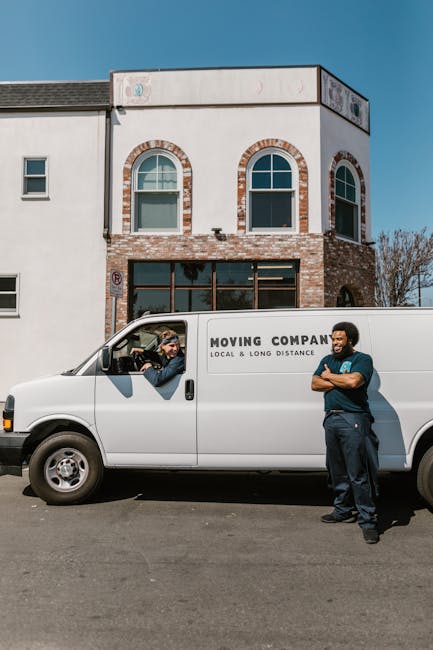
Gospel Oak estate Kentish Town man and van guide for local moves
If you are planning a move around Gospel Oak estate in Kentish Town, a well-organised man and van service can save you a lot of time, stress, and back-and-forth carrying. That sounds obvious, but in practice local moves are full of little things that catch people out: awkward stairwells, narrow parking, heavy furniture, and the usual London timing chaos. This guide to the Gospel Oak estate Kentish Town man and van guide for local moves explains how the process works, what to look for, and how to avoid the kind of problems that turn a quick move into a very long day.
Whether you are moving from a flat, shifting furniture between addresses, or just need help with a last-minute load, the aim is simple: help you make a smart choice and get the job done without drama. Truth be told, a good local move is mostly about planning properly and choosing the right help.
Table of Contents
- Why Gospel Oak estate Kentish Town man and van guide for local moves Matters
- How Gospel Oak estate Kentish Town man and van guide for local moves Works
- Key Benefits and Practical Advantages
- Who This Is For and When It Makes Sense
- Step-by-Step Guidance
- Expert Tips for Better Results
- Common Mistakes to Avoid
- Tools, Resources and Recommendations
- Law, Compliance, Standards, or Best Practice
- Options, Methods, or Comparison Table
- Case Study or Real-World Example
- Practical Checklist
- Conclusion
- Frequently Asked Questions
Why Gospel Oak estate Kentish Town man and van guide for local moves Matters
Local moving in and around Gospel Oak estate is not the same as a simple motorway run from one suburb to another. The roads, the parking, the loading space, the building access, and even the time of day can change how easy the move is. A man and van service is often the best fit because it is flexible, cost-effective, and ideal for smaller or medium-sized loads.
That matters especially in Kentish Town, where many homes are flats, conversions, or period properties with stairs that seem to go on forever. If you have ever tried to move a sofa down a tight landing while balancing a lamp and avoiding a scuffed wall, you will know why the right vehicle and crew make all the difference.
For local residents, students, landlords, and small businesses, the practical goal is not just transport. It is a smooth handover, fewer damaged items, and no wasted hours waiting for a vehicle that is too big, too small, or stuck in the wrong place. A good local moving plan takes those realities seriously.
If you want to understand the wider range of help available, it can be useful to look at the broader removal services overview as well as the more specific man and van service in Kentish Town. That gives you a sense of what is available before you commit.
How Gospel Oak estate Kentish Town man and van guide for local moves Works
In plain English, a man and van move means a driver and one or more helpers arrive with a suitable vehicle, load your items, transport them, and unload them at the destination. Simple on paper. In real life, the smoothness of the move depends on how well the details have been planned.
Most local moves follow a fairly similar pattern:
- You explain what needs moving, where from, where to, and when.
- The mover estimates the vehicle size, labour required, and timing.
- You confirm access details such as stairs, lifts, parking, and loading restrictions.
- The team arrives, protects items where needed, and loads everything safely.
- Items are transported and unloaded in the right rooms or drop-off point.
For shorter routes around Kentish Town and Gospel Oak, the whole process can often be completed in a few hours, depending on item volume and access. But a "short" move can still take longer if the furniture is bulky or the building access is awkward. A single large wardrobe can slow everything down more than people expect. Funny how one object can dominate the whole job.
It also helps to understand the difference between a man with a van, a removal van service, and a larger full-house removal. The basic task is transport, but the scale and support level can be quite different.
In practical terms, a local mover should be able to handle everything from a single room's contents to multiple loads across nearby addresses. If you are moving from a flat with tight access, it is worth reading the guide to narrow-access road removals, because Gospel Oak and nearby streets can be less forgiving than people imagine.
Key Benefits and Practical Advantages
The main advantage of a man and van service is flexibility. You are not paying for a huge truck you do not need, and you are not trying to squeeze a full household move into a car boot and a prayer. For many Gospel Oak estate and Kentish Town moves, that middle ground is exactly right.
Here are the benefits that matter most:
- Better value for smaller loads - ideal for flats, studio moves, furniture collection, and partial house moves.
- Local route knowledge - useful when parking is limited or access is fiddly.
- More flexible scheduling - handy for same-day or short-notice moves.
- Less stress - you get help lifting, carrying, loading, and unloading.
- Faster coordination - especially when moving between nearby addresses.
There is also a less obvious benefit: clearer decision-making. Once you know you do not need a large removals crew, you can focus on the service that suits the job rather than overbuying. That saves money and keeps the move simpler.
For bulky items, a specialist approach can be worth it. A delicate upright piano, for example, is not the time to improvise. The dedicated piano removals service exists for a reason. Similarly, if you are only moving a sofa, wardrobe, or dining table, the dedicated furniture removals option may be more suitable than a general move.
Expert summary: the best local move is not the biggest vehicle or the cheapest quote. It is the service that matches your load, access, timing, and level of help. That is the sweet spot.
Who This Is For and When It Makes Sense
This kind of move is a strong fit for a lot of everyday situations. If your job is local, relatively small, or time-sensitive, a man and van is often the practical answer.
It tends to suit:
- People moving in or out of flats in Kentish Town or Gospel Oak estate
- Students moving between term-time addresses
- Renters needing help with furniture or white goods
- Landlords arranging quick property turnovers
- Homeowners moving part of a household, not the entire lot
- Small businesses shifting office items or archive boxes
It also makes sense when you need to move on a tighter schedule. If completion day runs late, or the keys arrive later than expected, a flexible team can be far easier to manage than a rigid, oversized removal booking. For urgent situations, you may also want to look at same-day removals in Kentish Town.
A local example: a couple moving from a top-floor flat near Gospel Oak station might only have a bed, two desks, a few boxes, and a bike. For them, a compact van and two helpers is perfect. A full removal lorry would be overkill and, frankly, a bit of a headache on a narrow street.
If you are still weighing things up, the local lifestyle context can help. This local guide to living in Kentish Town is useful background if you are settling into the area and trying to understand how moving logistics fit around everyday life here.
Step-by-Step Guidance
Good moving outcomes usually come from good sequence. So let's keep it simple and practical.
1. Make a realistic inventory
List the items you need moved, and be honest about size and weight. A "few boxes" can become twelve boxes, a kettle, two monitors, and a plant that somehow needs its own seat. Count everything.
2. Check access at both addresses
Note stairs, lifts, parking distance, entrance width, and any door codes or porters. If a van cannot stop near the building, the loading time grows fast. This is where many local moves get underestimated.
3. Separate fragile, heavy, and awkward items
Fragile items should be packed first and labelled clearly. Heavy items should be grouped sensibly. Awkward items like mirrors, lamps, headboards, and flat-pack pieces need extra care, even if they look lightweight.
4. Choose the right service level
If you only need transport, a standard man and van may be enough. If you need packing help, ask about packing and boxes support as well. If you need storage between addresses, consider storage in Kentish Town so you are not forced into a rushed same-day handover.
5. Confirm timing and contact details
Make sure you know the arrival window, the contact number, and what happens if the previous job overruns. Small delays happen. What matters is whether the communication is clear.
6. Prepare the property before the team arrives
Clear hallways, reserve parking if possible, and keep paths open. If there is a fragile item or a narrow corner, point it out straight away. A quick five-minute briefing at the door can save a lot later.
7. Do a final check before departure
Walk through the property room by room. Open cupboards, check behind doors, and glance under beds. People forget things in the quietest corners. It happens all the time.
Expert Tips for Better Results
These are the small things that make a local move feel easier, cleaner, and less rushed.
- Book for the time of day that suits access - early mornings can be calmer, but only if you can actually be ready then.
- Take photos of bulky items - especially if there is any doubt about size, condition, or how they will fit through a doorway.
- Pack by room - it sounds basic, yet it makes unloading much faster and less chaotic.
- Use proper boxes for books and heavy goods - overfilled boxes are the fastest route to a sore back.
- Label priority boxes clearly - kettle, chargers, toiletries, bedding. The first night is much easier when those are easy to find.
One good habit is to keep a small essentials bag with you rather than on the van. Think phone charger, ID, keys, medication, and a snack. A move day can drift into late afternoon before you notice. At that point, a biscuit and a drink feel strangely heroic.
It is also worth checking whether the mover has clear policies on safety and handling. A reliable company should be able to explain what they do around load securing, care with fragile items, and general risk management. You can usually learn a lot from their insurance and safety information and their health and safety policy.
If sustainability matters to you, it is reasonable to ask what happens to waste packaging, bubble wrap, and any items that are no longer needed. A decent mover should be able to talk through recycling or reuse options. The recycling and sustainability approach is worth checking before booking.
Common Mistakes to Avoid
Local moves often go wrong for boring reasons. Not dramatic reasons. Just boring, avoidable ones.
- Underestimating the volume - especially when you have boxes stored in cupboards, lofts, or under furniture.
- Forgetting parking restrictions - a van that cannot stop nearby creates delays and extra lifting.
- Not measuring furniture - a sofa that is fine in the living room can become a problem at the staircase.
- Poor packing - flimsy boxes and loose items make the loading process slower and riskier.
- Booking too late - especially at month-end, weekends, or during student move periods.
- Assuming all vans are equal - size, loading height, and equipment matter more than people think.
Another classic mistake is assuming the cheapest quote is the best quote. Not always. If the price looks too good, check what is actually included. Does it cover loading time? Stair carries? Waiting time? Fuel? These are the details that can change the final bill.
For that reason, it helps to review pricing and quote guidance before you confirm anything. A clear quote is less exciting than a cheap-sounding one, but much better at 5 p.m. when you are still moving boxes.
Tools, Resources and Recommendations
You do not need a warehouse full of kit to move well. But the right small tools make a real difference.
| Item | Why it helps | Best use |
|---|---|---|
| Sturdy boxes | Protects contents and stacks better in the van | Books, kitchenware, mixed household items |
| Bubble wrap or paper | Prevents knocks and scratches | Glass, ceramics, lamps, framed items |
| Tape and labels | Keeps boxes sealed and organised | Any move with more than a few items |
| Furniture blankets | Reduces impact damage during loading | Tables, wardrobes, drawers, media units |
| Moving straps | Makes carrying safer and more controlled | Heavy or awkward items |
For many people, the most useful resource is not a tool at all, but a good plan. A room-by-room list, one labelled box for essentials, and a realistic moving schedule can do more for your day than any fancy gadget.
If you are moving a full flat or house, the more complete service pages can help you decide what mix of support you need. For example, flat removals in Kentish Town and house removals in Kentish Town are useful if your move is bigger than a simple van job. If it is smaller and more flexible, the removals in Kentish Town page can help you compare your options.
If you want a bit of background on the company before booking, the about us page is a sensible place to start. People often skip that, then wonder later what sort of team they are actually hiring. Fair enough, but the details matter.
Law, Compliance, Standards, or Best Practice
For a local man and van move, most of the important compliance issues are practical rather than complicated. You mainly want to know that the service is run responsibly, that items are handled safely, and that any payment or booking terms are clear.
A few best-practice points are worth keeping in mind:
- Insurance - ask what cover is in place for transport and handling. Do not assume it is automatic.
- Safe lifting and carrying - movers should use sensible manual handling methods, especially for stairs and awkward loads.
- Clear terms - understand cancellation terms, arrival windows, and what happens if access is not as described.
- Payment security - check that booking and payment processes are transparent and safe.
- Data privacy - if you share names, addresses, and contact details, the business should handle that properly.
It is also reasonable to ask about complaint handling if anything goes wrong. A reputable company should have a process for concerns, and you should be able to find it without hunting through the site for ages. That sort of transparency usually tells you a lot.
For a bit more reassurance, you may want to review the company's payment and security information, terms and conditions, and complaints procedure. None of that is glamorous, but it is the backbone of a trustworthy booking.
Options, Methods, or Comparison Table
If you are deciding how to move locally, it helps to compare the most common options side by side. The right choice depends on load size, access, budget, and how much help you want on the day.
| Option | Best for | Pros | Watch out for |
|---|---|---|---|
| Man and van | Small to medium local moves, single items, flats | Flexible, practical, often cost-effective | Needs accurate volume and access details |
| Full removal team | Larger houses or full household moves | More hands, more support, better for big loads | Can be more than you need for a small job |
| Self-move | Very small loads, low budget | Full control, possible savings | Heavy lifting, time pressure, injury risk |
| Specialist item move | Pianos, antiques, large furniture | Better protection for difficult items | Not the cheapest option, but often the right one |
For many Gospel Oak estate and Kentish Town residents, man and van sits in the best middle ground. It is especially useful if you are moving in stages, splitting a move across two addresses, or combining furniture transport with a few boxes and small appliances.
If you have a business move rather than a domestic one, you might want to compare with office removals in Kentish Town. Office jobs tend to need different planning, especially where equipment, paperwork, and timings are involved.
Case Study or Real-World Example
Here is a realistic local scenario. A tenant in Kentish Town is moving from a second-floor flat near Gospel Oak estate to another property a short drive away. They have a bed, mattress, small desk, chair, wardrobe, six boxes, a mirror, and a kitchen trolley that has somehow become emotionally attached to the household. It is not a huge move, but it is too much to manage comfortably in a normal car.
The moving day plan is straightforward:
- The tenant measures the wardrobe and confirms it can pass the stairwell with a slight tilt.
- Parking is checked at both addresses in advance.
- Fragile items are boxed separately and labelled.
- The mover arrives with a van sized for the load, not oversized, not tiny.
- The bed and furniture are loaded first, then the boxes, then the mirror padded last.
Because the access was checked early, there were no surprises. Because the boxes were labelled, unloading was quick. And because the tenant had kept an essentials bag with bedding, chargers, and toiletries, the first night felt normal rather than chaotic. Small win, but a real one.
That is the broader lesson for any local move: the more precise you are at the start, the calmer the day feels at the end. Simple, really. Not always easy, but simple.
Practical Checklist
Use this before moving day. It is the sort of list that saves time when your brain is doing three things at once.
- List every item that needs moving
- Confirm access details for both properties
- Check parking or loading restrictions
- Measure large furniture and doorways
- Pack fragile items securely
- Label boxes by room and priority
- Separate essentials for the first night
- Clarify timing, price, and what is included
- Ask about insurance and safety procedures
- Keep contact numbers handy on the day
- Walk through both properties before the van leaves
Practical takeaway: local moving success usually comes from accurate information, sensible packing, and choosing the right vehicle size. If those three things are in place, most of the stress drops away.
Conclusion
A Gospel Oak estate Kentish Town man and van guide for local moves is really about making a busy local job feel manageable. The best moves are not the most complicated ones. They are the ones where the route, the load, the access, and the timing all make sense before the van even arrives.
If you are moving a flat, shifting a few furniture pieces, or handling a short-notice local transfer, the right service can make life noticeably easier. Keep the details tight, ask sensible questions, and choose help that fits your actual move rather than an imagined one. That is how you avoid waste, delay, and unnecessary lifting.
If you are ready to take the next step, compare your needs with the services available, check the booking terms, and get a quote that reflects the real job. Small move, big difference. Honestly, that little bit of planning pays off more than people expect.
Get a free quote today and see how much you can save.
Frequently Asked Questions
What does a man and van service usually include for a local move?
It usually includes a suitable van, loading help, transport, and unloading at the destination. Some services also offer packing support, furniture protection, or help with stairs, but that should be confirmed before booking.
Is a man and van enough for a flat move in Kentish Town?
Often, yes. For a studio or one-bedroom flat, especially with moderate furniture and boxes, a man and van is usually a sensible fit. If the load is larger or access is difficult, a bigger removals team may be better.
How far in advance should I book a local move?
For the best choice of time slot, book as early as you can. If your move is at month-end, on a weekend, or during student moving periods, earlier booking is especially helpful. Short-notice bookings can still work, but options may be tighter.
What should I tell the mover before the job starts?
Give them a clear list of items, property access details, parking information, stair or lift access, and any fragile or unusually heavy pieces. The more accurate the information, the less likely there will be delays or surprises.
Can a man and van handle furniture like wardrobes or sofas?
Yes, provided the vehicle and crew are suitable for the item size and weight. For larger or more delicate furniture, it helps to choose a service that specifically handles furniture removals or has experience with awkward items.
What if I need storage between moving out and moving in?
That is a common situation. Short-term storage can be very useful if keys are delayed, completion times shift, or you need to move in stages. It is worth asking about storage options before the moving day gets too close.
Are same-day moves possible around Gospel Oak estate and Kentish Town?
Sometimes, yes. Availability depends on workload, distance, and the size of your move. If you need something urgent, a same-day removal service can be a useful option, but it is best to contact the team as early in the day as possible.
How do I know if the quote is fair?
A fair quote should be clear about what is included: vehicle size, labour, time, mileage if relevant, and any extra charges. If a quote feels vague, ask for a breakdown. Clear pricing is usually a good sign.
Do movers help with packing and boxes?
Some do, some do not. If you need help with packing materials or packing itself, check whether the service offers boxes, wrapping, and packing support. This can save a lot of time if you are on a tight schedule.
What about insurance and item safety?
You should always ask what cover is in place and how items are handled safely. Even for local moves, it is worth checking because protection matters just as much on a short journey as on a long one.
Is a man and van cheaper than a full removals company?
It often is for smaller moves, because you are paying for a more compact service. But the final cost depends on access, time, item volume, and any extra handling needed. The cheapest-looking option is not always the best value.
What happens if parking is difficult near my building?
That should be discussed before the move. If parking or loading space is limited, the team may need to plan for a longer carry distance or a different vehicle setup. Local knowledge helps a lot here, especially in tighter streets.
Where can I learn more about the company before booking?
Start with the about page, then check practical pages such as pricing, safety, and terms. That gives you a much clearer picture than jumping straight to a booking form.